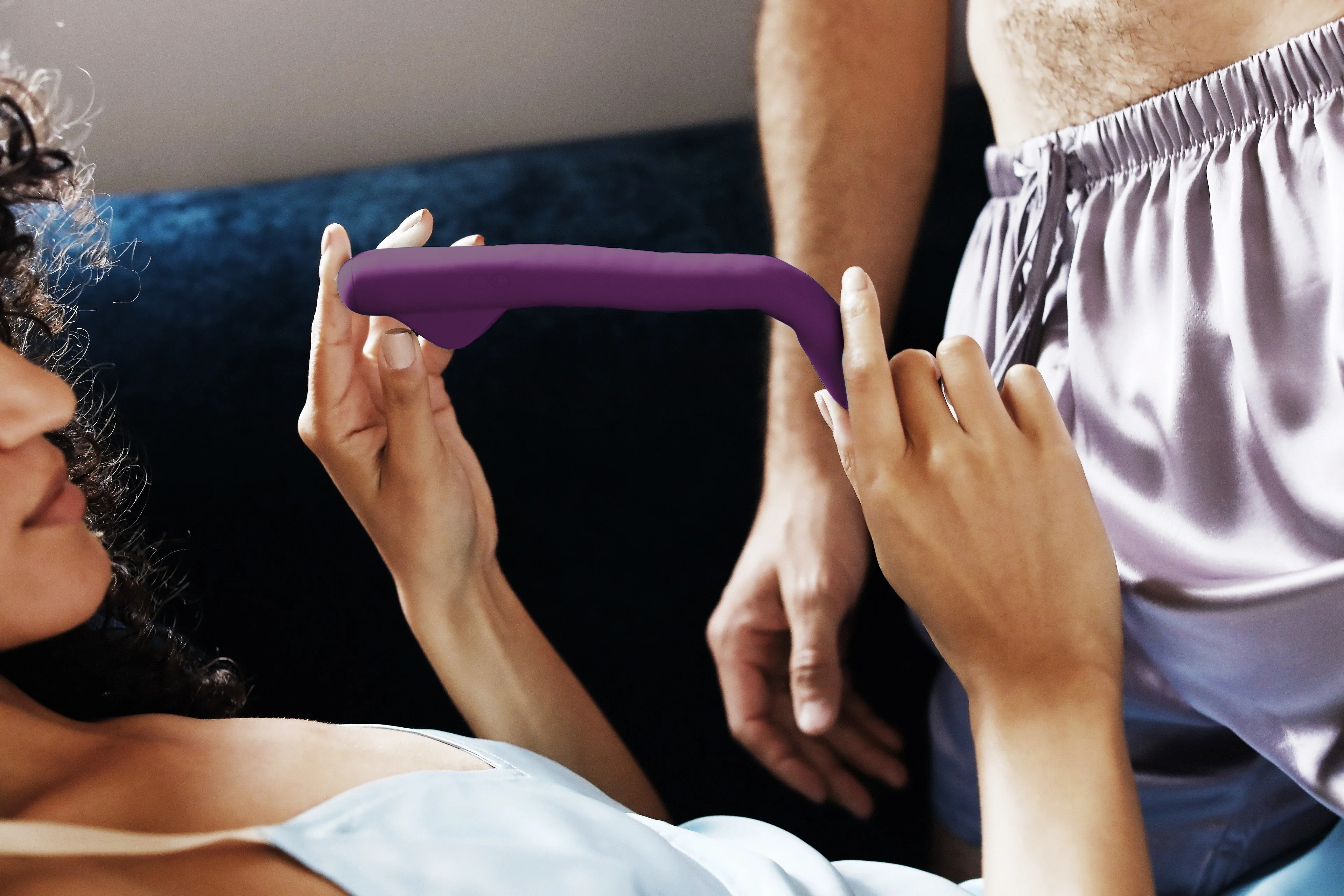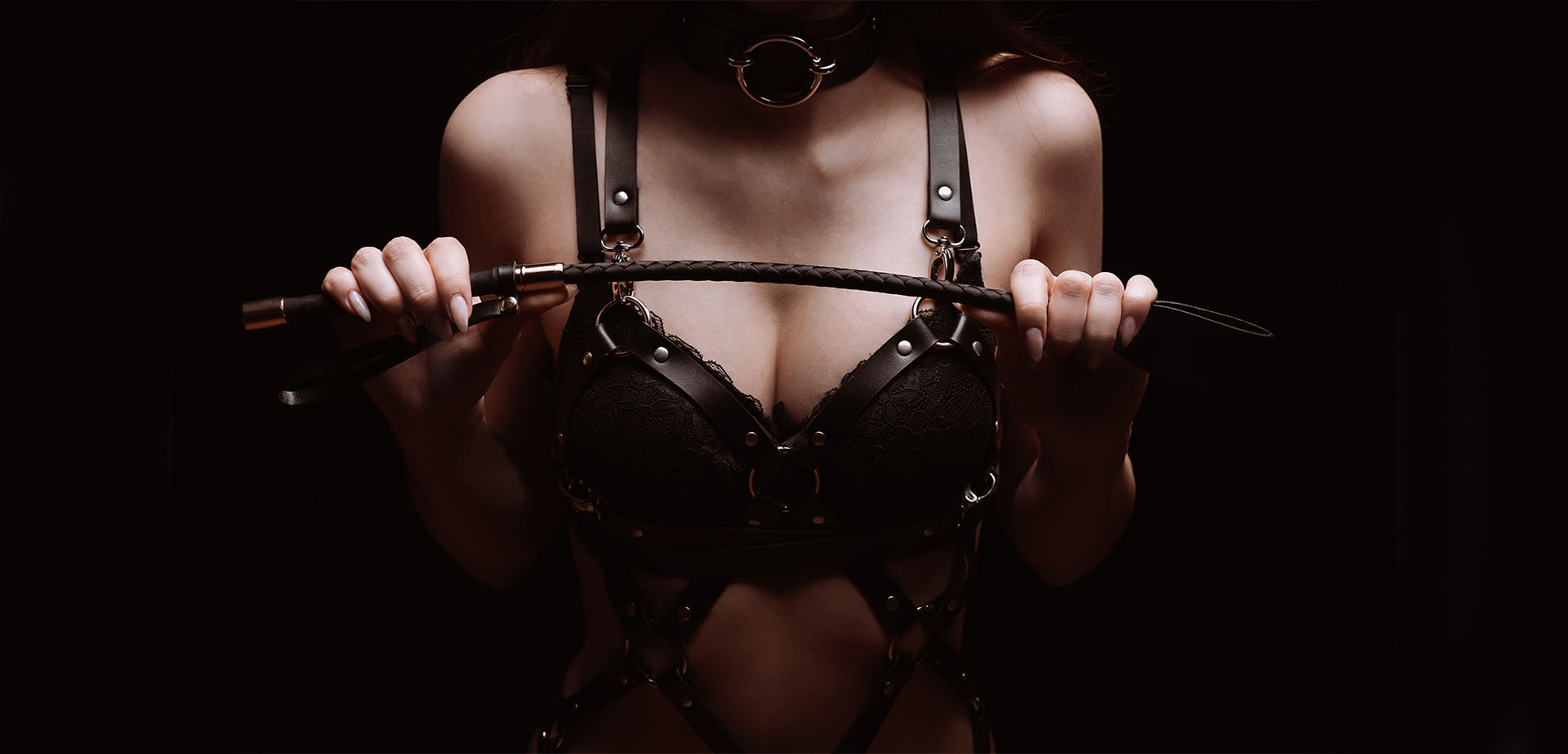
Bringing up bondage with a long-term partner is mostly a conversation, not a kit list. The first restraint isn't the first move — agreeing how you'll talk about it is. This is the British, patient version of that conversation.
The short version
- The talk happens fully clothed, on a sofa, not in bed.
- Frame it as curiosity, not deficit. "I read this guide and was curious" beats "we should spice things up".
- Agree the smallest possible first step — a blindfold, not a full kit.
- Pick a safeword before the first session, not during.
- Aftercare matters more than the scene. Plan it.
The conversation, in three steps
1. Open with curiosity, not complaint
The opening line that actually works is some variation of: "I was reading this guide on bondage for couples and a few bits made me think. Curious if you'd want to talk about it." That sentence does three things — it admits you're learning rather than demanding, it implies you've thought about it (so this isn't an impulse), and it asks for permission to even have the conversation.
What doesn't work is framing it around a problem ("our sex life is boring", "I think we need more excitement"). Even if the problem is real, that frame puts your partner on the defensive — they hear "you aren't enough", not "I want this with you".
2. Listen first
Their first reaction is data, not a verdict. The most common honest first responses are some flavour of "I'm a bit nervous", "I don't really know what bondage is", or "isn't that for kinky people?" — none of which mean no. They mean *not yet, please give me information*.
This is where the guide-reading helps. Pull up our beginner's guide on a phone, read it together, see what catches their eye and what makes them visibly uncomfortable. Both reactions are useful.
3. Agree the smallest possible first step
Not a kit. Not a scene. The smallest piece of equipment that introduces the *idea* — a £8 silk blindfold or a soft fabric tie. Use it during sex you'd have had anyway. The point of the first session isn't to "do bondage" — it's to learn that introducing something new doesn't break anything.
If that feels normal after a session or two, the second purchase upgrades — padded leather wrist cuffs, a beginner under-the-bed strap. The Royal Society of Public Health's 2023 guidance on safe play recommends padded restraint over hard metal for any session over 10 minutes; we agree.
The rules — set them once, in advance
Safewords
Pick two: a yellow word ("slow down, check in") and a red word ("stop, now, fully"). The traffic-light system (green/yellow/red) is the most-recommended UK-wide framework — Brook (the UK sexual health charity) and the College of Sexual & Relationship Therapists both teach it. Use words you'd never say accidentally. "Pineapple" is a classic for a reason.
What's on the table; what isn't
Talk through this in advance, not in the moment. Common starting boundaries: no marks visible above the collar/below the cuff, no breath play, no public exposure, removable restraints only. Add to the list as you both learn what you like — never subtract by surprise.
Safety shears
Buy a pair (£4.50 from any kink retailer including ours, or a paramedic shop). Keep them within arm's reach during any rope or fabric tie. They cut rope, fabric, and clothing without nicking skin. Scissors don't — never use scissors with anyone restrained.
Aftercare — the bit you skip is the bit that matters
Aftercare is the 15-30 minutes after the scene ends — water, blankets, low light, slow conversation. The endorphin and adrenaline cascade during a bondage scene is real; coming down without a plan can feel emotionally hollow ("subdrop", in kink shorthand). The plan is simple:
- Water and a snack within 5 minutes — chocolate or fruit work fine.
- A blanket, both of you wrapped under it.
- Twenty minutes of low-stakes conversation, not analysis. Talk about anything.
- Check in the next morning, by text if not in person. "How are you feeling about last night?" — it's not a needy question; it's the right one.
The first kit, ranked
- Silk or fabric blindfold — £6–£12. The single best first piece. Sensory deprivation amplifies everything else without restricting movement.
- Soft fabric or padded leather wrist cuffs — £18–£35. Welded steel D-rings, padded inner. Stocked at BondageBox.
- Under-the-bed restraint set — £25–£40. Adjustable straps that go under the mattress and clip to cuffs. No bedpost gymnastics required.
- A small bullet vibrator — £18–£30. Bondage works alongside ordinary partnered sex; the bullet keeps things present.
- Safety shears — £4.50. Yes, it's the boring one. Buy them anyway.
What if it doesn't work?
Maybe the first session is awkward. Maybe one of you hates the blindfold. Maybe it just feels self-conscious. None of that means the conversation was wrong; it means you've got data. Pause for a week or two. Try a different first piece, or just leave it for a month and let it settle.
What does NOT work is pushing through awkwardness, because the body remembers. The whole reason for the slow first step is that *trying again next month* feels easy if the first try was small, and impossible if the first try was a full kit on a Friday night.
Frequently asked
- How do I bring up bondage with my partner?
- Open with curiosity, fully clothed, on a sofa rather than in bed. A line that works in practice: "I was reading this guide on bondage for couples and a few bits made me think." That frames it as learning, not deficit. Read the beginner's guide together — both your reactions to the same paragraph are useful information.
- What if my partner doesn't want to try bondage?
- The first reaction is data, not a verdict. Common first responses ("I'm nervous", "I don't really know what it is") usually mean "not yet, please give me information". Listen first, share the guide together, agree to revisit the conversation in a few weeks if needed. Never push past a clear no — but a soft no is often a "let me think about it".
- What's the safest first piece of bondage equipment?
- A silk or fabric blindfold (£6–£12). Sensory deprivation amplifies everything else without physically restricting movement, so it's the lowest-stakes introduction. The next-step is padded leather wrist cuffs with welded steel D-rings (£18–£35). The Royal Society of Public Health (2023) recommends padded restraint over hard metal for any session over 10 minutes.
- What is a safeword and how do you pick one?
- A safeword is an agreed word that immediately ends or pauses a scene regardless of context. Pick two using the traffic-light system: yellow ("slow down, check in") and red ("stop, fully"). Choose words you'd never say accidentally — Brook (UK sexual health charity) recommends nouns unrelated to the act, like "pineapple" or "lemon". Agree both words before the first session, never during.
- What is aftercare in bondage?
- Aftercare is the 15-30 minutes after a bondage scene ends — water, blanket, low light, slow conversation. The endorphin / adrenaline cascade during a scene is real; coming down without a plan can feel emotionally hollow ("subdrop"). Brook and the College of Sexual & Relationship Therapists both publish aftercare frameworks; the practical version is water, snack, wrapped under a blanket together, twenty minutes of low-stakes talk, and a check-in the morning after.
Recommended kit from the BondageBox catalogue
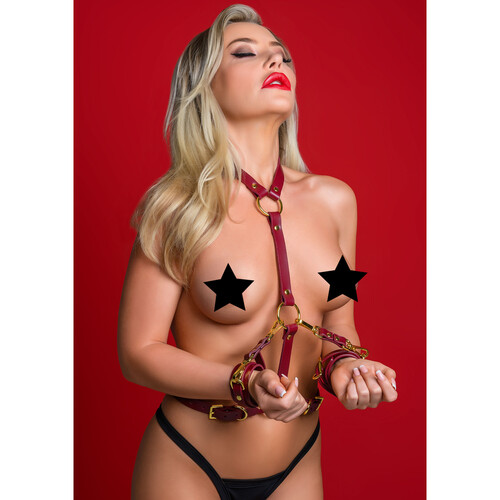
Taboom Bondage in Luxury Harness and Cuffs Small to Med
Padded leather wrist + ankle cuffs — the right "first kit" piece.
£50.99 →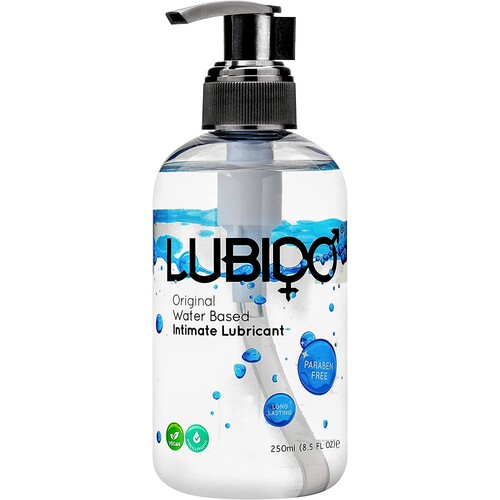
Lubido 250ml Paraben Free Water Based Lubricant
Standard water-based lube — buy one bottle, you'll need it.
£5.99 →Filed under Couples
← Back to The Journal