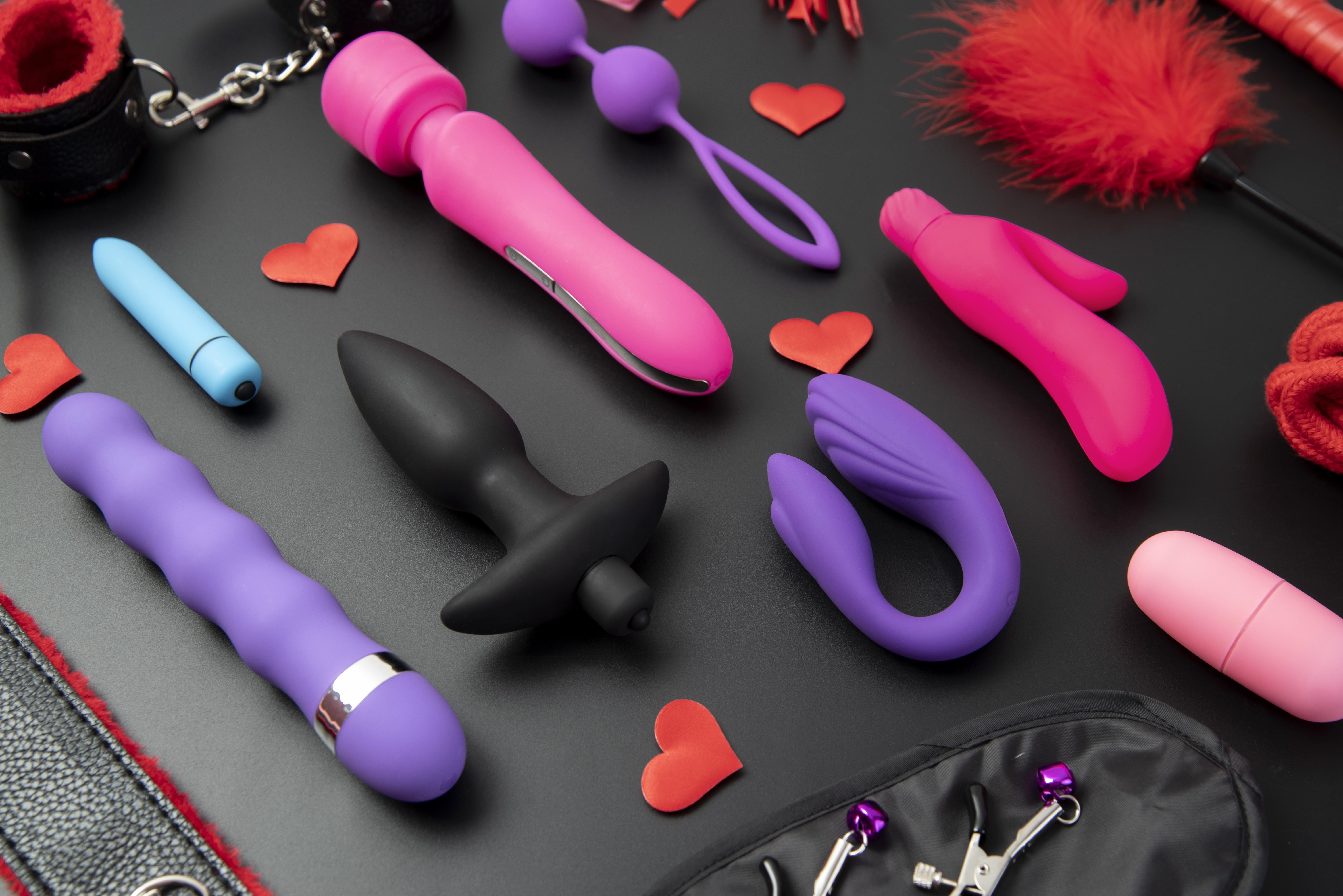

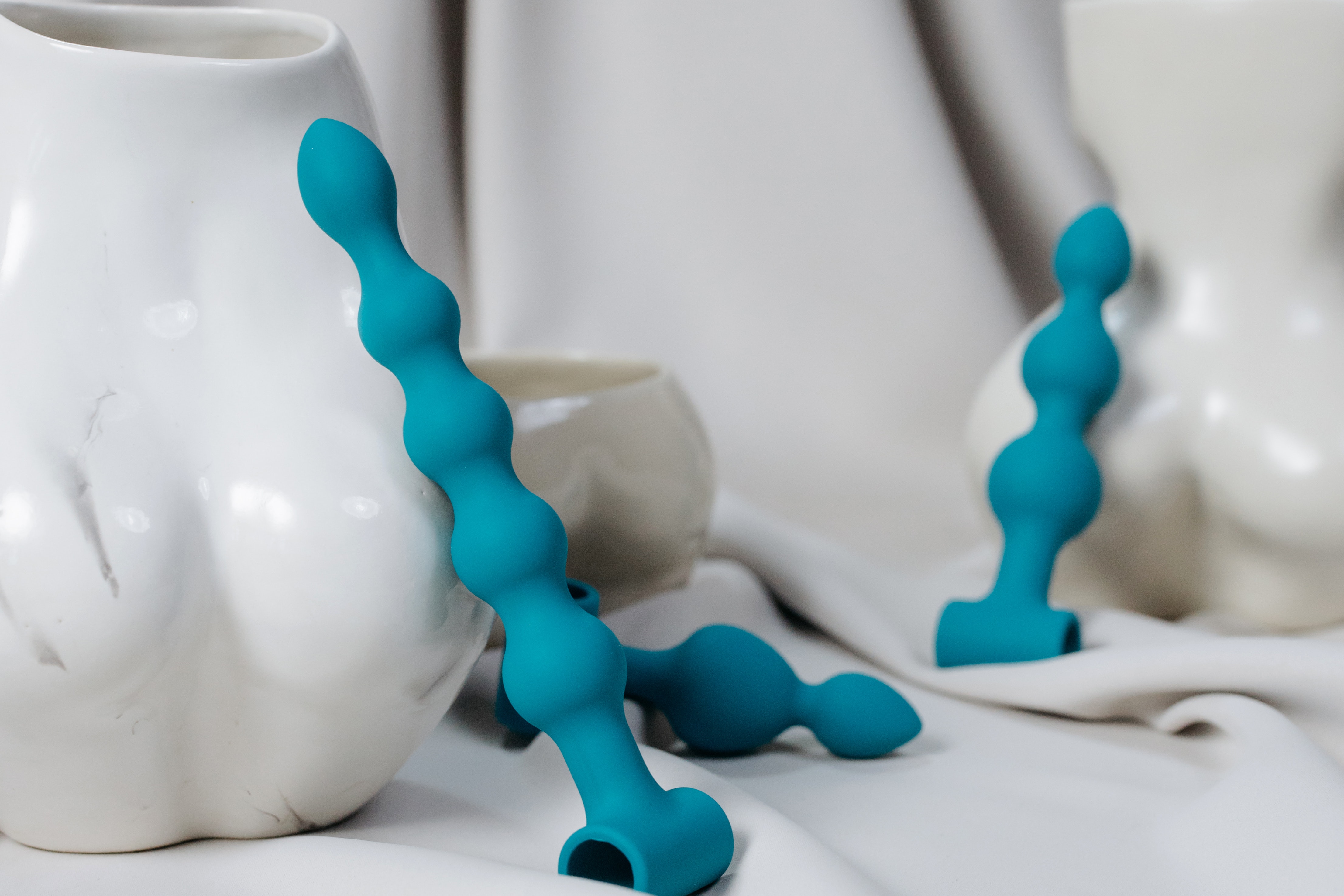
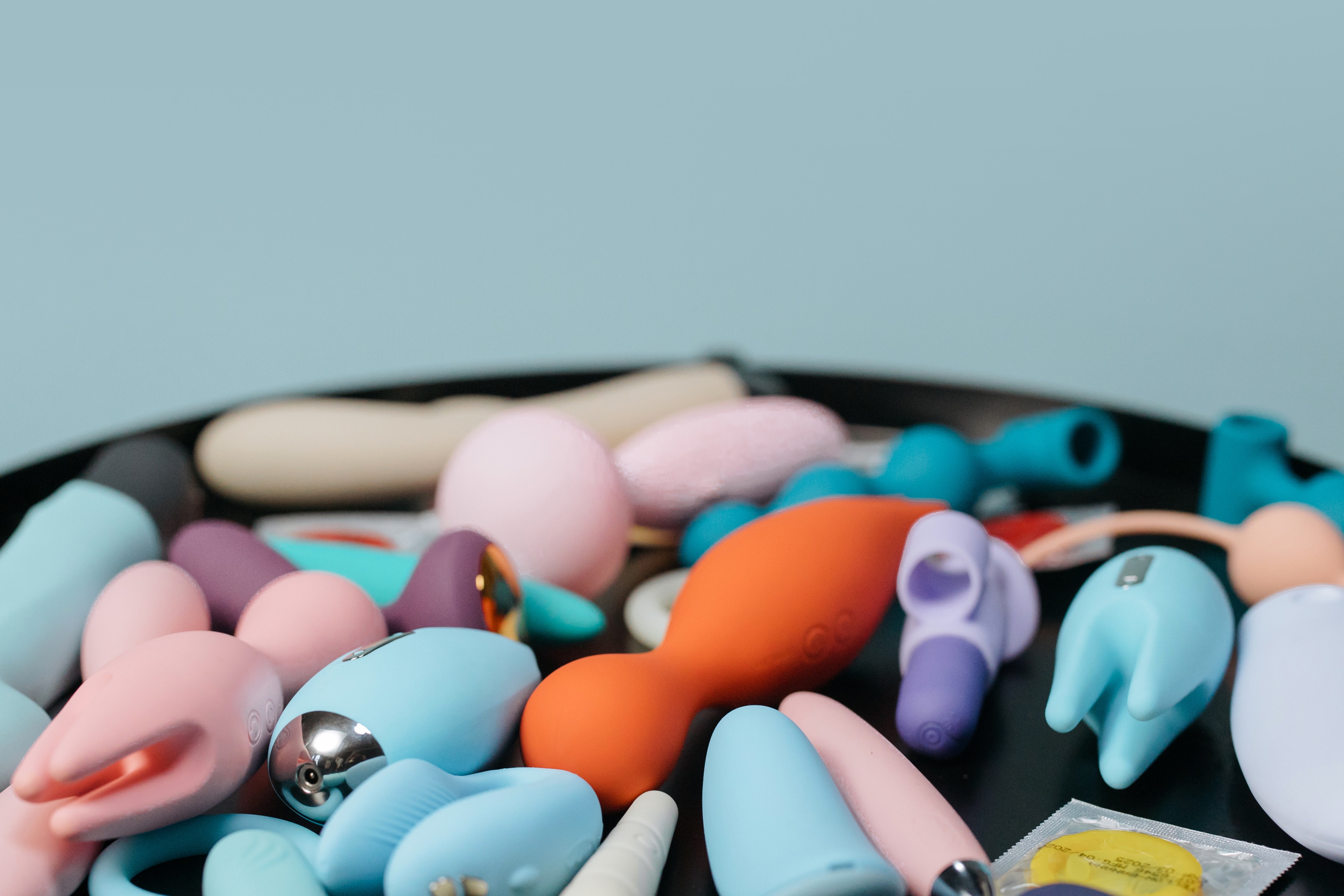
How to clean sex toys (UK, 2026): non-porous toys (platinum-cure silicone, borosilicate glass, ABS plastic, 304/316 surgical steel) wash in warm water with a dedicated antibacterial toy cleaner after every use; rinse, pat dry, air-dry fully before storage. Porous toys (TPE, jelly, "skin-feel" rubber) cannot be sterilised — rinse + dry + retire after 1–2 years. Silicone, glass, ABS and steel can also be boiled for 3 minutes for full sterilisation between partners; battery-powered toys never go anywhere near water unless explicitly labelled "fully waterproof IPX7". Always store completely dry, in a breathable pouch, away from each other (silicone-on-silicone contact bonds materials together over time).
Why cleaning matters
Adult-toy hygiene is not optional. The UK NHS specifically flags shared sex toys as a route for transmitting bacterial vaginosis, urinary tract infections, yeast overgrowth, and several STIs including HPV, herpes, trichomoniasis and hepatitis B — and porous materials hold residue from previous sessions inside the surface itself, where soap doesn't reach. Even for solo use, residual lubricant, body fluids and skin cells become a culture medium for bacteria within hours. Within 24–48 hours an unrinsed silicone wand can support millions of CFU of bacteria; left longer, biofilm forms and becomes very hard to remove without proper sterilisation.
The good news is that the answer is mostly simple. Four materials (platinum-cure silicone, borosilicate glass, ABS plastic, 304/316 surgical steel) are non-porous, biocompatible per ISO 10993, and clean fully with warm water and a body-safe cleaner. The four problem materials (TPE, "jelly" PVC, "skin-feel" elastomer, untreated rubber) are microscopically porous — they hold contaminants no matter how hard you scrub. This guide tells you exactly what to do for every common material, and what to never substitute.
The four quick rules
- Clean within two hours of use. Sooner is better. Body fluids and lubricant residue dry into a film that gets harder to lift with each passing hour.
- Use a dedicated toy cleaner, not soap. Soap leaves a residue that irritates mucosal tissue on next use; dedicated toy cleaners are pH-balanced for genital contact and rinse cleanly. We sell several from £4; any major UK brand (Sliquid Shine, ID Toy Cleaner, Tenga Real Wash) works.
- Air-dry fully before storage. Patting dry isn't enough. Residual moisture trapped inside an unaired pouch grows mildew within 48 hours. Stand toys upright on a clean towel until completely dry to the touch, then store in a breathable cloth pouch — not plastic.
- Sterilise between partners or after illness. Boiling, bleach-solution soaking, or dishwasher top-rack — depending on material. Detailed below.
Cleaning protocol by material
Most product pages on UK retailers (including ours) state the material in the spec — if the listing doesn't, assume porous and treat conservatively. Below is the protocol for each common sex-toy material in 2026, ranked from easiest to hardest to keep clean.
Platinum-cure silicone (the default premium material)
Used on every body-safe brand we stock — LELO, We-Vibe (where they appear), Doxy heads, Fun Factory, Tantus, Aneros Syn line, plus most premium dildos, plugs and beads. Platinum silicone is non-porous, biocompatible per ISO 10993, and survives every common cleaning method.
- Normal use: Warm water + dedicated toy cleaner, rinse, pat dry, air-dry on a clean towel.
- Deep clean (between partners or quarterly): Boil for 3 minutes in a clean pot, or run the top rack of a dishwasher (no detergent, no rinse-aid). Both are safe for fully-silicone, non-motorised toys only.
- Storage: Cloth pouch, separate from other silicone toys (silicone-on-silicone contact bonds materials over time — the toys literally fuse).
- Never use: Silicone-based lube during use (it bonds with the toy surface and degrades it within weeks). Bleach undiluted (it can leach chlorides into the surface).
Borosilicate glass (Pyrex-equivalent — the most durable material)
Used on premium dildos and plugs from Icicles, Adam & Eve, Lovehoney glass lines. Borosilicate is non-porous, dishwasher-safe, microwave-safe, and pairs with every lubricant including pure silicone.
- Normal use: Warm water + soap (yes, soap is fine on glass — there's no surface for residue to bond to). Rinse, pat dry.
- Deep clean: Boil for 5 minutes, dishwasher top rack, or 10% bleach soak for 10 minutes followed by triple rinse.
- Temperature play: Warm under hot tap or chill in fridge (never freezer, never microwave — borosilicate handles 200°C variation but rapid temperature shock can crack it).
- Never use: Dropping from height. Borosilicate is drop-resistant, not unbreakable — chipped edges are a safety hazard.
304/316 surgical-grade stainless steel
Used on premium dildos, plugs and weighted toys from b-Vibe, Njoy, Doxy bullet attachments, Aneros Maximus. The same alloy used for orthopaedic implants. Heavy by design; non-porous; indestructible.
- Normal use: Warm water + soap or toy cleaner. Pat dry to avoid water spots.
- Deep clean: Boil (any duration), bleach soak, dishwasher — all safe.
- Temperature play: Conducts heat and cold extremely well; rinse under hot/cold tap to your taste.
- Never use: Acidic cleaners (vinegar, citric acid) on 304-grade steel over time — they can pit the surface. 316 is acid-resistant.
ABS plastic (the budget non-porous option)
Used on the bodies of pleasure-air toys (Womanizer, Satisfyer, LELO Sona), bullet vibrators, and many couples' kit components. ABS is non-porous and biocompatible but degrades under bleach and heat.
- Normal use: Warm water + toy cleaner. Pat dry.
- Deep clean: 70% isopropyl alcohol wipe-down is the safest sterilisation route; ABS warps at boiling temperatures and dishwasher cycles can fade colours. Avoid bleach.
- Storage: Cloth pouch; ABS doesn't bond with other materials so co-storage is fine.
TPE / TPR / "skin-feel" rubber
Used on Fleshlight's SuperSkin sleeves, Tenga Eggs (single-use), most budget strokers, "realistic" dildos at the £15–£40 tier. TPE is microscopically porous — it absorbs body fluids and lubricant into its surface, and there is no cleaning method that fully removes contaminants once they're inside.
- Normal use: Rinse with warm water immediately after use; use dedicated TPE cleaner (Fleshwash for Fleshlights) rather than soap, which leaves an irritant residue. Pat dry thoroughly — TPE that stays damp grows mildew within 48 hours.
- Deep clean: Not really possible. TPE cannot be boiled, bleached, or autoclaved without destroying it.
- Storage: Dust with renewing powder or cornflour to prevent tackiness. Keep separate from other TPE/silicone toys.
- Retire: Replace every 1–2 years of regular use, sooner if discolouration or odour appears. Single-use TPE (Tenga Eggs) is for one or two sessions, not more.
- Never share between partners. No exceptions. The surface cannot be made fully safe for a new user.
Leather (cuffs, harnesses, paddles)
Full-grain bridle leather (Rouge Garments, premium pieces) and bonded leather (budget kits) follow the same care protocol but bonded leather has a shorter lifespan.
- Normal use: Wipe with a damp cloth after use; never submerge. Allow to air-dry away from direct heat.
- Deep clean: Leather-specific saddle-soap-free cleaner (Renapur leather balsam, Saphir Renovateur) every 3–6 months. Skip saddle soap — it strips the wax finish on bridle leather.
- If body fluids contact leather: Wipe immediately with diluted toy cleaner; deep-clean within 24 hours.
- Storage: Cool, dry, ventilated cupboard. Plastic bags trap moisture and grow mildew on leather inside weeks.
Latex (clothing, condoms, bondage tape)
Natural latex requires very specific care to last; it is also chemically incompatible with oil-based lubes and many silicones.
- Normal use: Wash with cold or warm water (never hot — hot water degrades latex) and a tiny amount of mild soap or dedicated latex wash. Hang to dry on a wide hanger; never tumble dry.
- Storage: Dust both sides with unscented talc or silicone shine; hang in a dark, cool cupboard. Never store folded — latex creases permanently. Never store touching metal or rubber — both stain latex permanently.
- Never use: Oil-based lube during wear (degrades latex within minutes). Bleach. Tumble dryer.
- Latex allergy: 1–6% of UK adults have a latex allergy (NHS data). Patch-test on the inner forearm for 24 hours before first wear.
What cleaner should I use?
Three tiers, each appropriate for different use cases:
- Dedicated toy cleaner (£4–£12): The default. Sliquid Shine, ID Toy Cleaner, Tenga Real Wash, Pjur Med Clean. pH-balanced, body-safe, rinses cleanly.
- 70% isopropyl alcohol (£3 from any pharmacy): For deep sterilisation of ABS plastic and the bodies of motorised toys (where you can't submerge them).
- 10% bleach solution: Strongest sterilisation route for non-porous, non-motorised toys (silicone, glass, steel). 10ml household bleach in 90ml water; soak 10 minutes; triple-rinse with fresh water until odour is gone. Reserve for between-partner sterilisation.
Skip: hand soap (residue), shower gel (heavy fragrance), antibacterial kitchen spray (toxic), white wine vinegar (acidic, pits some steel grades), washing-up liquid (residue), boiling water for motorised toys (kills the electronics).
Motorised toys — the rules change
Any toy with batteries, USB-charging or a motor needs to be cleaned without submerging the electrical components unless the product is explicitly rated IPX7 (fully waterproof). Most premium toys are IPX7 these days; check the spec sheet.
- IPX7-rated: Treat like a non-motorised toy of the same material — submerge, rinse, dry.
- "Splashproof" (IPX4) or lower: Wipe the handle with a damp cloth + toy cleaner; rinse only the head/contact surface. Pay particular attention to charging ports — corrosion ruins the unit faster than anything else.
- Battery compartments: Always remove batteries before cleaning, even on splashproof toys.
- Charging: Wait until fully dry before placing on the charge pad / connecting USB. Damp connectors can short the charging circuit.
How often should I clean?
| When | Method | Why |
|---|---|---|
| After every use | Warm water + toy cleaner; air-dry | Removes residue before biofilm forms |
| Before each use (if stored > 1 month) | Wipe with toy cleaner | Removes accumulated dust |
| Between partners | Sterilise (boil/dishwasher/bleach) | Prevents STI transmission |
| After illness (yeast, UTI, BV) | Full sterilisation | Avoids re-infection cycle |
| Quarterly | Deep clean + inspect for wear | Catches micro-cracks before they harbour bacteria |
Storage — the half nobody talks about
A perfectly clean toy stored badly becomes a contaminated toy again within 48 hours. Three rules:
- Fully dry before storage. Air-dry on a clean towel for 2+ hours, stand toys vertically so internal channels drain. Damp toys grow mildew inside cloth pouches.
- Breathable container. A cotton pouch, a clean drawer with no plastic liner, or a wooden box. Plastic bags trap residual moisture and accelerate decay on every porous material.
- Separate silicone toys from each other. Silicone bonds with silicone over months of contact. Two silicone dildos sharing a pouch will literally fuse together. Wrap individually if storing in the same drawer.
When to retire a toy
Body-safe materials (silicone, glass, steel, ABS) last 10+ years with proper care. Porous materials (TPE, jelly, rubber) should be retired after 1–2 years regardless of how careful you've been — the surface degrades on a timeline you cannot see. Signs to retire any toy immediately:
- Visible cracks, splits or peeling on the surface
- Persistent odour after cleaning
- Discolouration or yellowing (especially in silicone) — indicates UV or lubricant damage
- Tackiness that returns within an hour of cleaning + dusting
- Charging port corrosion (motorised toys)
Frequently asked
- Q. Is dishwashing safe for sex toys?
- Yes for fully-silicone, non-motorised toys — top rack, no detergent, no rinse-aid. Glass and steel are also dishwasher-safe. ABS, TPE, leather and any motorised toy should NOT go in the dishwasher.
- Q. Can I use bleach on a sex toy?
- Diluted (10% bleach in water), for 10 minutes, on non-porous non-motorised toys (silicone, glass, steel) — yes. Always triple-rinse with fresh water until the chlorine smell is fully gone. Skip bleach on ABS plastic, leather, TPE, and anything with electronics.
- Q. What's the best sex-toy cleaner in the UK?
- Three reliable picks at £4–£12: Sliquid Shine (pH-balanced, fragrance-free), ID Toy Cleaner (good for porous materials too), Tenga Real Wash (specifically formulated for TPE strokers). All stocked at BondageBox with UK delivery.
- Q. How do I clean a Fleshlight properly?
- Remove the sleeve from the case immediately after use. Rinse the sleeve thoroughly with warm water; optionally use Fleshwash every few sessions. Pat dry with a microfibre cloth, then air-dry the sleeve fully (24+ hours, hung if possible) before reinserting into the case. Dust with renewing powder or cornflour if the surface becomes tacky. Never use soap, alcohol, or boiling water — all destroy the SuperSkin TPE surface.
- Q. Can I use the same toy with multiple partners?
- Yes for non-porous toys (silicone, glass, steel, ABS) IF you fully sterilise between partners (boil, dishwasher, or bleach solution). Yes for porous toys (TPE, rubber, jelly) only if every partner uses a barrier (condom over the toy), which is also the NHS recommendation.
- Q. How long does a sex toy last?
- Body-safe materials (silicone, glass, steel, ABS) last 10+ years with normal care. TPE and rubber should be retired after 1–2 years of regular use. Motorised toys are usually limited by battery lifespan — 3–5 years for the lithium cell, after which most premium brands offer paid replacement or upgrade.
- Q. Why does my silicone toy feel sticky?
- Most often: residue from silicone-based lube (which bonds with platinum silicone over time). Wash thoroughly with toy cleaner, dust with cornflour if needed. If the stickiness persists after cleaning, the surface has been degraded — retire the toy. Always use water-based or hybrid lube with silicone toys; pure silicone lube is fine on glass, steel and ABS only.
- Q. Is it safe to put a sex toy in the microwave?
- Glass and ABS plastic can technically tolerate brief warming but it is never recommended — temperature distribution is uneven, batteries explode, and most toys contain materials (metallic flecks, conductive ink labels) that arc. Warm glass under hot tap water instead.
- Q. Can sex toys give you a UTI or yeast infection?
- Yes — improperly cleaned toys are a documented cause of recurrent UTIs and yeast overgrowth (NHS guidance). The risk is highest with porous materials (TPE, rubber, jelly) that hold residue from previous sessions inside the surface. Body-safe materials (silicone, glass, steel) cleaned properly carry essentially no risk.
- Q. What's the difference between toy cleaner and regular soap?
- Dedicated toy cleaners are pH-balanced for genital contact (around pH 4.5–5.5, matching the vagina); regular soap is pH 9–10 (alkaline), which disrupts the vaginal microbiome and causes irritation. Toy cleaners also rinse residue-free; soap leaves a film that further irritates mucosal tissue on next use.
Related guides + products
Pair this cleaning protocol with the BondageBox lube guide (chooses cleaner-compatible lubricants), our glossary entry on "body-safe" (the criteria for material safety), and the essentials category for toy cleaners themselves. For premium silicone toys we particularly recommend the LELO range; for glass dildos that survive years of dishwashing, the realistic dildos category filtered to glass.
Filed under Materials & Care
← Back to The Journal